No gym? No problem! Unlock your full strength potential from the comfort of your home with expert-designed bodyweight routines and smart use of basic gear.
The Home Strength Revolution: Your Definitive Guide to Building Muscle with Bodyweight & Minimal Equipment
In an age where health and fitness are paramount, the idea that you must have a fully equipped gym to build strength is a persistent myth. The truth is, your own body is a remarkably effective training tool, capable of delivering incredible results. This guide will show you how to unlock your full strength potential right from the comfort of your home, utilizing expert-designed bodyweight routines and smart integration of minimal equipment. Say goodbye to gym memberships and hello to a stronger, more capable you!
Introduction: The Power of Your Own Body
For too long, bodyweight training has been underestimated, often relegated to warm-ups or exercises for beginners. However, with the right approach and understanding of progression, you can build significant muscle, increase strength, and enhance your overall fitness using little to no equipment. The advantages are compelling: unparalleled convenience, zero cost (beyond optional basic gear), and the flexibility to work out whenever and wherever suits you. This guide is your blueprint to mastering fundamental movements, applying effective progression strategies, and designing powerful home-based strength programs.
Section 1: Foundational Principles of Strength Training at Home
Building muscle and strength, regardless of where you train, relies on consistent application of key principles.
Progressive Overload Explained: This is the golden rule of strength training. To get stronger, your muscles must be continually challenged beyond their current capabilities. Without adding external weight, how do we achieve this?
Increase Repetitions & Sets: Performing more reps or sets with the same exercise.
Decrease Rest Times: Shorter breaks between sets make the workout more intense.
Slower Tempo: Lengthening the time under tension (e.g., slower lowering phase of a squat).
More Difficult Variations: Progressing from easier to harder versions of an exercise (e.g., from knee push-ups to regular push-ups to decline push-ups).
Increased Frequency: Training a muscle group more often.
Mastering Form: Proper technique is paramount. Incorrect form not only reduces the effectiveness of an exercise but dramatically increases your risk of injury. Focus on controlled movements, engaging the correct muscles, and maintaining stability throughout the exercise. It’s always better to do fewer reps with perfect form than many with sloppy technique.
Warm-up & Cool-down: Never skip these. A 5-10 minute dynamic warm-up (light cardio, joint rotations, dynamic stretches like leg swings) prepares your body for exertion. A 5-10 minute cool-down (static stretches holding for 20-30 seconds) helps improve flexibility and aids recovery.
Section 2: The Core Bodyweight Arsenal (Detailed Exercise Library with Progression)
Here are fundamental bodyweight exercises, along with how to make them easier or harder. Aim for 3-4 sets of 8-15 repetitions for most exercises, adjusting based on your progression.
Lower Body:
Squats:
Execution: Stand with feet shoulder-width apart, chest up. Lower hips as if sitting in a chair, keeping knees over toes. Go as deep as comfortable, ideally thighs parallel to the floor.
Progression: Beginner: Wall sit, Chair squats. Standard: Bodyweight Squats. Advanced: Sumo squats (wider stance), Jump squats, Pistol Squat (single leg) progression (hold onto support, then free-standing).
Lunges:
Execution: Step forward or backward, lowering hips until both knees are bent at a 90-degree angle. Keep front knee behind toes and back knee hovering above the floor.
Progression: Beginner: Static lunges (no step). Standard: Forward/Reverse Lunges. Advanced: Walking Lunges, Jump Lunges, Bulgarian Split Squats (rear foot elevated on a chair).
Glute Bridges:
Execution: Lie on your back, knees bent, feet flat on the floor close to glutes. Lift hips towards the ceiling, squeezing glutes at the top.
Progression: Standard: Two-leg Glute Bridge. Advanced: Single-Leg Glute Bridge, hold a weight (book, small dumbbell) on hips.
Calf Raises:
Execution: Stand tall, lift heels slowly, rising onto the balls of your feet. Hold briefly, then lower slowly.
Progression: Standard: Two-leg Calf Raise. Advanced: Single-Leg Calf Raise.
Upper Body (Push):
Push-ups:
Execution: Start in a plank position, hands slightly wider than shoulders. Lower chest towards the floor, keeping body in a straight line. Push back up.
Progression: Beginner: Wall Push-ups, Incline Push-ups (hands on elevated surface like a counter/bench), Knee Push-ups. Standard: Full Push-ups. Advanced: Decline Push-ups (feet elevated), Spiderman Push-ups, Plyometric (clapping) Push-ups.
Dips (using a sturdy chair/bench):
Execution: Sit on the edge of a chair, hands next to hips, fingers pointing forward. Slide hips off, supporting weight with arms. Lower body until elbows are at 90 degrees, then push back up. Keep close to the chair.
Progression: Beginner: Feet flat on floor (less weight). Standard: Legs extended. Advanced: Feet elevated on another chair.
Upper Body (Pull – often the hardest for bodyweight only):
Inverted Rows (using a sturdy table or low bar):
Execution: Lie on your back underneath a sturdy table (or a broomstick placed across two chairs). Grab the edge with an overhand grip, hands wider than shoulder-width. Pull your chest towards the table, keeping your body straight.
Progression: Beginner: Higher incline (more vertical body angle). Standard: Lower incline (more horizontal). Advanced: Single-Arm Inverted Row.
Resistance Band Rows: Attach a resistance band to a sturdy anchor point (door frame, pole). Hold ends with both hands and pull back, squeezing shoulder blades.
Core (Abs & Lower Back):
Planks:
Execution: Hold a straight line from head to heels, either on forearms or hands (high plank). Engage core, avoid sagging hips or piking up.
Progression: Standard: Forearm Plank, High Plank. Advanced: Side Plank, Plank with alternating leg/arm lifts, Plank with Hip Dips.
Crunches / Leg Raises:
Execution (Crunches): Lie on back, knees bent, feet flat. Place hands behind head (support, don’t pull). Lift head and shoulders off floor, engaging abs.
Execution (Leg Raises): Lie on back, hands under glutes (optional). Keep legs straight, lift them towards the ceiling, then lower slowly without touching the floor.
Progression: Standard: Standard Crunches, Leg Raises. Advanced: Bicycle Crunches, Reverse Crunches, V-Ups.
Section 3: Integrating Minimal Equipment for Enhanced Results
These simple tools can significantly expand your home workout possibilities.
Resistance Bands: Versatile for adding tension to squats, glute bridges, push-ups (looped around back and hands), and providing resistance for pull movements like rows and face pulls. They come in various strengths.
Dumbbells/Kettlebells (Light Pair): Even a pair of 5-15lb dumbbells can add significant challenge to squats, lunges, rows, and overhead presses, or be used for bicep curls and tricep extensions. If you don’t have them, use full water bottles or heavy books.
Sturdy Chair/Bench: Essential for dips, elevated push-ups, step-ups, and Bulgarian split squats. Ensure it’s stable and won’t slip.
Yoga Mat: For comfort during floor exercises and planks.
Section 4: Sample Weekly Training Programs
Here are examples of how to structure your workouts. Aim for 3-5 sessions per week, allowing for rest days.
Beginner Full-Body Program (3x/week – Monday, Wednesday, Friday):
Warm-up (5 min)
Bodyweight Squats: 3 sets of 10-12 reps
Knee Push-ups (or Incline): 3 sets of 8-10 reps
Glute Bridges: 3 sets of 12-15 reps
Inverted Rows (or Band Rows): 3 sets of 8-10 reps
Plank: 3 sets, hold 20-30 seconds
Cool-down (5 min)
(Focus on mastering form before increasing reps or moving to harder variations.)
Intermediate Upper/Lower Split (4x/week – Mon/Thu: Lower, Tue/Fri: Upper):
Lower Body Day:
Warm-up
Bodyweight Squats (or Sumo Squats): 3-4 sets of 12-15 reps
Reverse Lunges: 3-4 sets of 10-12 reps per leg
Single-Leg Glute Bridge: 3 sets of 10-15 reps per leg
Calf Raises (Single-Leg): 3 sets of 15-20 reps per leg
Plank variations: 3 sets, 30-45 seconds
Cool-down
Upper Body Day:
Warm-up
Full Push-ups (or Decline): 3-4 sets of as many reps as possible (AMRAP)
Inverted Rows (or Band Rows): 3-4 sets of 10-15 reps
Chair Dips: 3 sets of 10-15 reps
Pike Push-ups (for shoulders, hands on floor, hips up, lower head): 3 sets of 8-12 reps
Leg Raises: 3 sets of 15-20 reps
Cool-down
(Progress by adding sets, reps, or using harder exercise variations/bands.)
Section 5: Nutrition & Recovery for Home Gains
Even with bodyweight training, proper nutrition and recovery are non-negotiable for muscle growth and performance.
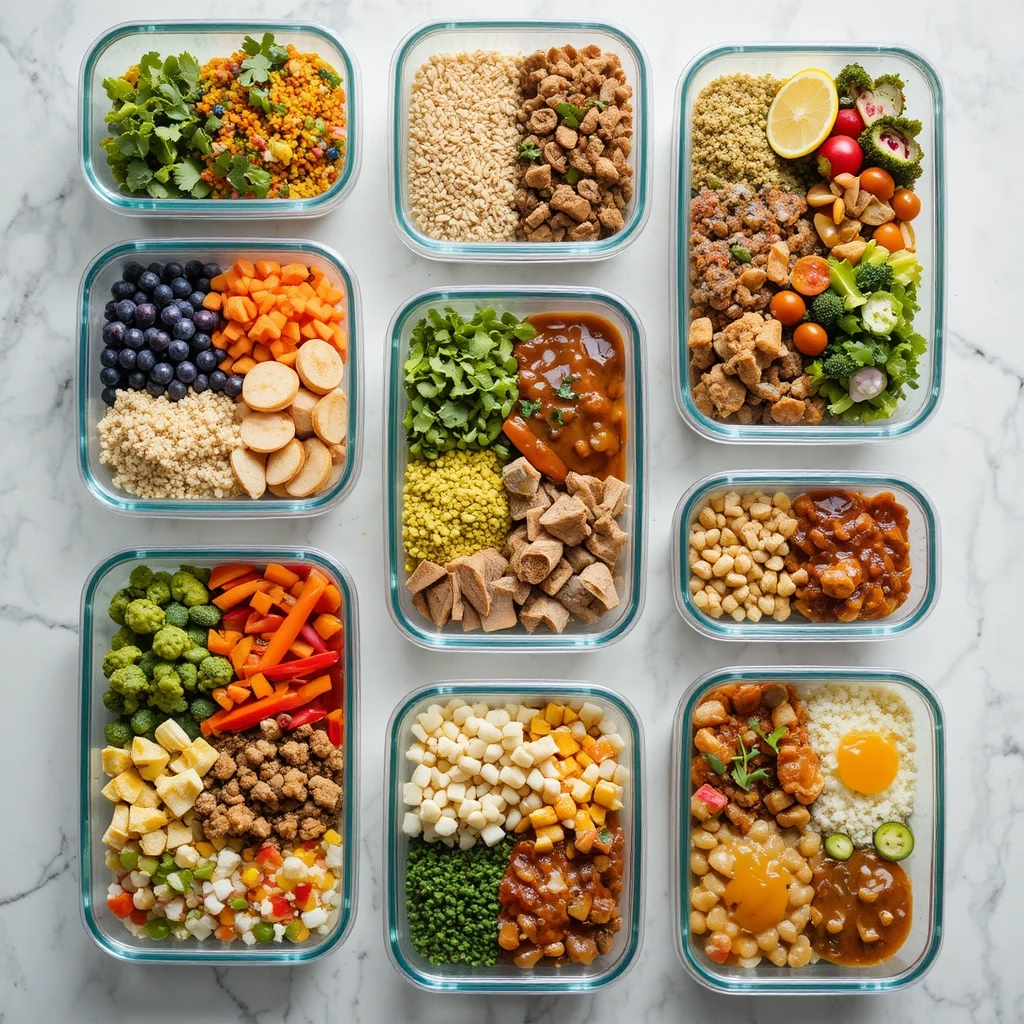
Protein Intake: Ensure you’re consuming enough protein (around 1.6-2.2 grams per kg of body weight) to support muscle repair and synthesis. Lean meats, fish, eggs, dairy, legumes, and protein supplements are excellent sources.
Hydration: Drink plenty of water throughout the day.
Sleep: Aim for 7-9 hours of quality sleep nightly, as this is when your body repairs and rebuilds muscle tissue.
Conclusion: Your Home, Your Gym, Your Stronger Self
The home strength revolution is accessible to everyone. By understanding the principles of progressive overload, mastering fundamental movements, and creatively utilizing your space and minimal equipment, you can build a strong, functional, and healthy body. Embrace the journey, listen to your body, and celebrate every rep of progress. Your home is now your gym, and your body is your most powerful tool.
Call to Action/Resources:
Ready to kickstart your home strength journey? Share your favorite bodyweight exercise in the comments below! For more detailed video guides on specific exercises, explore our video library.