
Introduction
When we talk about sustainability, we refer to meeting present needs without undermining the capacity of future generations to meet theirs. Food systems—how we grow, process, transport, and consume food—play a pivotal role in sustainability. Our diets, individual choices, and policy decisions all link health and environmental stewardship.
What Is “Sustainability” in Relation to Food?
“Sustainability” has many definitions depending on context, but in the realm of food it is deeply interdisciplinary, touching environment, economics, nutrition, health, and social equity. A sustainable diet is one that:
Has a low environmental footprint
Supports food and nutrition security
Is culturally acceptable, affordable, safe, and healthy
Respects biodiversity and ecosystems
Optimizes natural and human resources
In other words, sustainable food systems aim to provide healthy diets for people today without compromising ecological integrity or the capacity of Earth’s systems to support future generations.
Why Sustainable Food Systems Are Essential
The challenges are formidable:
Billions of people already suffer from poor nutrition.
The global population is projected to reach about 10 billion by 2050, increasing demand for food and pressure on ecosystems.
Agriculture is a major contributor to environmental change: it is responsible for a large share of greenhouse gas emissions, land transformation, freshwater depletion, biodiversity loss, and nutrient pollution.
Food production is both a driver and a victim of environmental change. Climate shifts, soil degradation, and water scarcity threaten yields and food security.
Given this context, current food systems are not sustainable in the long term. Without deliberate transformation, the world risks crossing ecological thresholds, undermining human health, and triggering crises in food access.
Healthy Diets from Sustainable Systems: The Dual Imperative
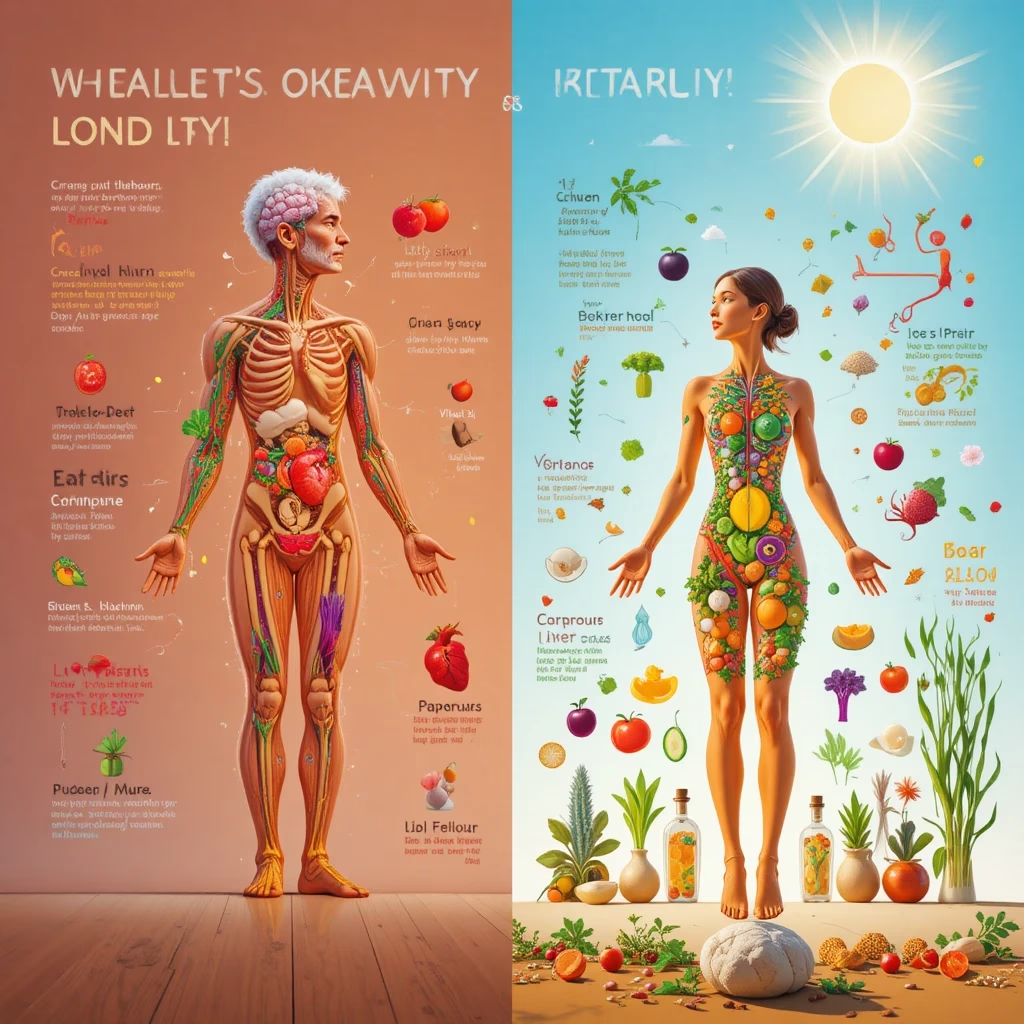
A core insight emerging from research is that health and sustainability goals often align. Diets that benefit human health tend to also reduce environmental burdens. For instance:
Emphasizing plant-based foods (vegetables, fruits, legumes, nuts, whole grains)
Limiting red and processed meats, added sugars, and refined grains
Moderating intake of animal-sourced proteins like poultry and fish
Using healthy unsaturated oils rather than highly processed fats
These dietary patterns are not rigid “diets” but flexible guidelines adaptable to local cultures, food availability, and preferences.
Meanwhile, on the production side, healthy systems must operate within ecological “safe boundaries.” These include thresholds related to:
Greenhouse gas emissions
Land use change
Freshwater consumption
Biodiversity and species loss
Nutrient (nitrogen, phosphorus) cycling
The EAT-Lancet Commission has proposed global targets that define a “safe operating space” wherein food production can sustain human health without destabilizing critical Earth system processes.
The Great Food Transformation: What Needs to Happen
Shifting toward sustainable, healthy food systems will require bold, coordinated action at multiple scales. Here are foundational strategies proposed by experts:
Policy commitment to healthy diets
Governments and institutions must prioritize access, affordability, and availability of nutritious foods while discouraging unsustainable, unhealthy options.Reorient agricultural priorities
Instead of maximizing yields of a few staple crops, policies should promote diversity of nutrient-rich crops that support both health and ecological resilience.Sustainable intensification
Improve yields on existing farmland through innovations and practices that reduce inputs (water, fertilizer) and enhance soil health, carbon sequestration, and biodiversity.Strong governance of land and water
Coordinate local, national, and international actions to protect ecosystems, restrict conversion of high-value habitats, and preserve marine systems.Halve food loss and waste
Reduce waste across the supply chain—from farm to table—by about 50 %. This includes improving infrastructure, storage, transportation, and consumer behavior.
By combining these strategies, it becomes possible—and necessary—to feed nearly 10 billion people in 2050 without breaching environmental limits.
Key Takeaways
Sustainability in food is not optional—it’s a necessity for the health of people and planet.
Diet transformations (favoring plant-forward patterns) and production reforms must go hand in hand.
Individuals, communities, businesses, and governments all have roles in shaping sustainable systems.
Ultimately, what’s good for Earth often benefits human health. A healthy planet helps foster healthy people.