

Introduction
As we age, maintaining physical balance becomes one of the most important factors for independence, safety, and quality of life. Reduced stability increases the risk of falls, which are one of the leading causes of injury among older adults worldwide. Fortunately, consistent balance exercises for seniors can dramatically improve coordination, strengthen stabilizing muscles, and restore confidence in daily movement.
Balance naturally declines due to muscle loss, slower reflexes, joint stiffness, and changes in inner ear function. These factors affect posture, walking stability, and reaction time. The good news is that targeted balance exercises for seniors help retrain the body to respond faster and maintain control during movement.
This guide explores why balance training matters, how it prevents injuries, and which exercises seniors can safely perform at home.
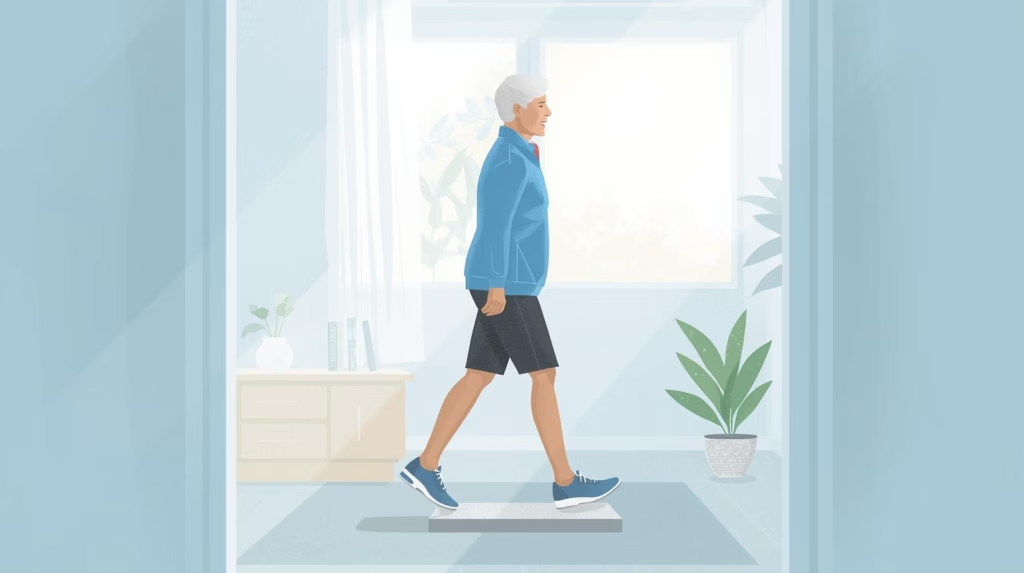
Why Balance Training Is Essential for Seniors
Falls account for millions of emergency visits each year among people over 60. According to the CDC, one out of four seniors experiences a fall annually. However, studies show that balance exercises for seniors reduce fall risk by strengthening key muscle groups and improving neuromuscular control.
Balance training improves:
Posture stability
Leg and core strength
Coordination
Joint mobility
Reaction speed
Walking confidence
When seniors practice balance regularly, the brain and muscles communicate more efficiently, helping prevent sudden loss of stability.
Best Balance Exercises for Seniors
Standing on One Leg
This simple exercise strengthens the ankles, knees, and hips. Hold onto a chair if needed and lift one foot slightly off the floor. Maintaining this position improves stability and core activation.
Heel-to-Toe Walk
Walk slowly placing one foot directly in front of the other. This trains coordination and challenges balance safely.
Chair Sit-to-Stand
Standing up without using hands strengthens the lower body and enhances postural control.
Side Leg Raises
Lifting the leg sideways builds hip stability, crucial for preventing falls while walking.
Toe and Heel Raises
These improve ankle strength and enhance walking balance.
How Often Should Seniors Train Balance?
Experts recommend performing balance exercises for seniors at least 3–5 times per week. Even 10–15 minutes per day can produce measurable improvements within a few weeks.
Consistency is key. Regular practice helps the nervous system adapt, improving reflexes and muscle stability.
Health Benefits Beyond Fall Prevention
Balance exercises for seniors do more than prevent falls. They also support:
Better posture
Increased mobility
Reduced joint stiffness
Stronger bones
Improved circulation
Enhanced confidence
Greater independence
Improving balance allows seniors to move freely, perform daily activities safely, and maintain a higher quality of life.
Scientific Evidence Supporting Balance Training
Multiple studies confirm that balance exercises for seniors significantly reduce fall risk and improve physical function.
CDC Fall Prevention Research
https://www.cdc.gov/falls/prevention/index.html
NIH Study on Balance Training
https://www.ncbi.nlm.nih.gov/pmc/articles/PMC6124987/
Journal of Aging and Physical Activity
https://journals.humankinetics.com/view/journals/japa/japa-overview.xml
WHO Global Report on Falls Prevention
https://www.who.int/publications/i/item/9789241563536
Conclusion
Balance loss is a natural part of aging, but it is not inevitable or irreversible. With consistent balance exercises for seniors, older adults can rebuild stability, strengthen muscles, and protect themselves from serious injuries.
These simple movements require no gym and no complex equipment, making them accessible and safe. Practicing regularly improves physical safety and restores confidence, allowing seniors to maintain independence and enjoy daily life with greater security.